NeuroLog.life: Bridging Therapy and Home Care


About the client
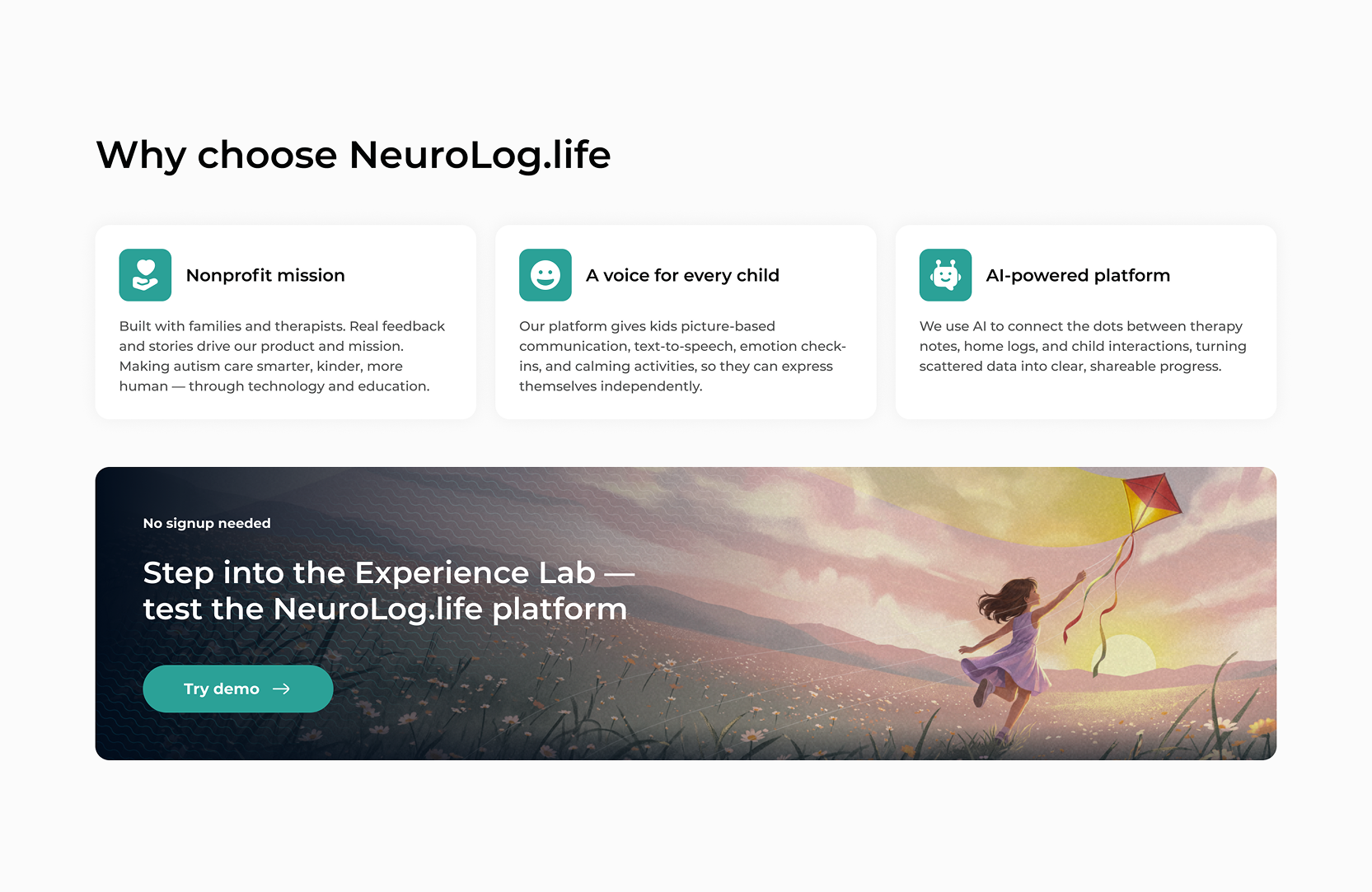
NeuroLog.life Foundation was born from a deeply personal experience. One of its founders spent his childhood alongside a younger brother who is autistic, non-speaking, and requires substantial daily support. This eventually inspired the creation of the organization. As the founder put it, "I realized families and therapists often hold different pieces of the same child's story. We built NeuroLog to help bring those pieces together responsibly."

Business сontext
The U.S.-based nonprofit organization aims to improve coordination between therapy and home care for children with autism. NeuroLog brings therapy sessions and home observations into a single platform. Designed to support communication and care coordination, it does not diagnose conditions, recommend treatment, or replace professional judgment. AI helps summarize information and identify patterns across structured observations, while decisions remain with care professionals and families.
By the time Andersen Lab became involved, NeuroLog had already piloted an early version of the platform with families, filed a U.S. provisional patent application related to behavioral-pattern detection, and engaged advisors across neurodevelopment, behavioral support, and AI/ML.
However, as the organization prepared to reach more families, new challenges emerged alongside product development. Addressing them required additional perspective and industry experience.
Andersen Lab joined the initiative on a pro bono basis, contributing expertise from its extensive healthcare practice. There was no commercial engagement behind the partnership, only a shared belief that the mission deserved meaningful support.
Our engagement focused on:
- Marketing strategy and positioning;
- Product direction and roadmap development;
- Industry advisory and domain expertise.
Challenges
Turning an early-stage nonprofit initiative into something people rely on takes more than working technology. NeuroLog needed its value, user experience, and positioning to reach different audiences clearly while maintaining trust in a sensitive healthcare-adjacent domain.
Key challenges included:
- Balancing platform development with marketing, UX, and product-planning work;
- Creating a clear, intuitive experience for therapists, parents, and children;
- Establishing credibility for a nonprofit preparing for broader adoption.
Project overview
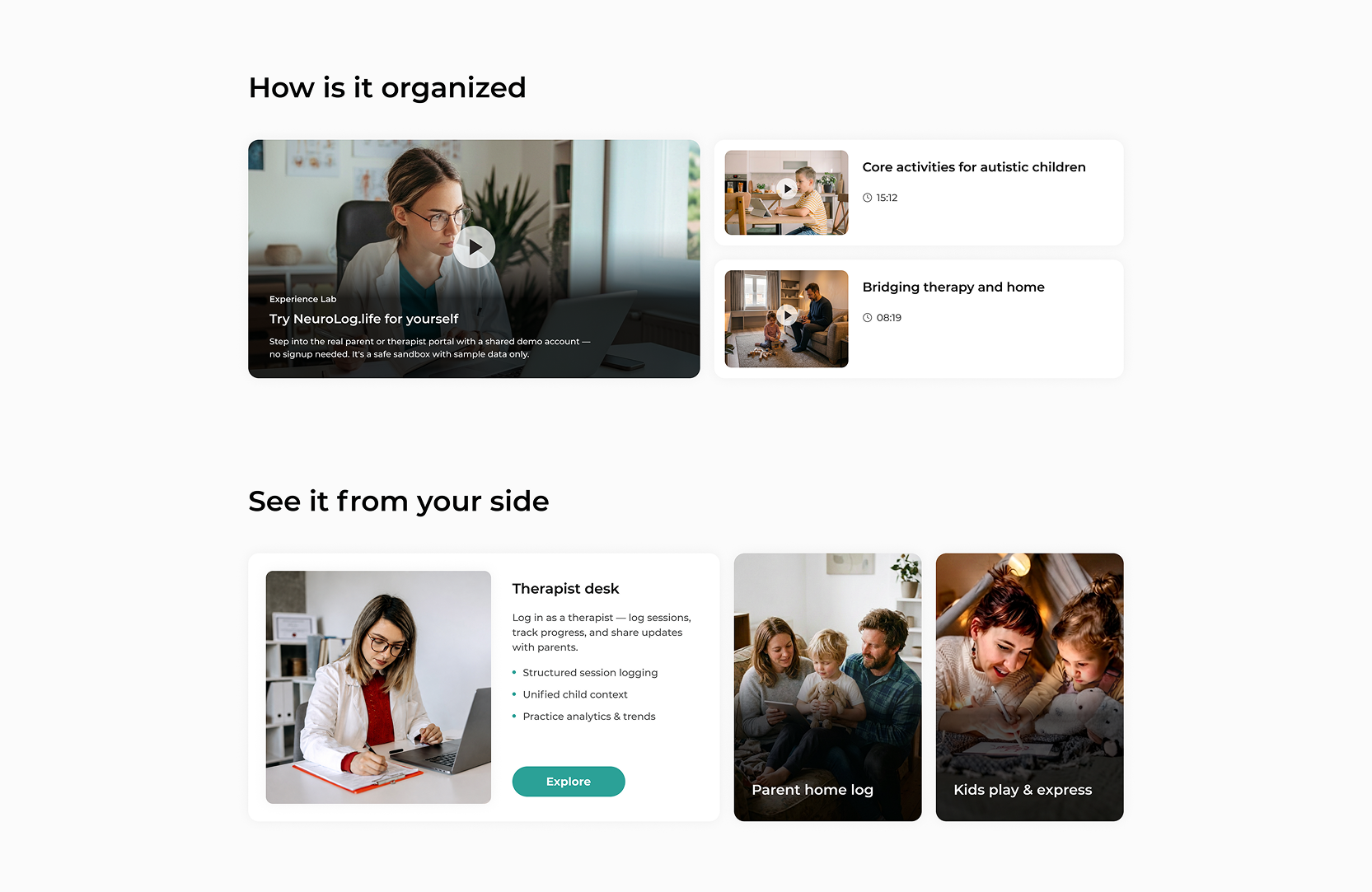
NeuroLog brings together therapy notes, home observations, communication activity, sleep data, and behavioral insights in one place. By creating a shared view of information collected from different environments, the platform helps families and therapists better understand a child's needs, experiences, and progress over time. In doing so, it supports more informed and human-centered care.
Andersen Lab's role was to provide an independent assessment of the platform and help the organization make informed decisions about its future development. We contributed product, UX, accessibility, and healthcare expertise to help the NeuroLog team strengthen the platform and support its continued growth.
About the project
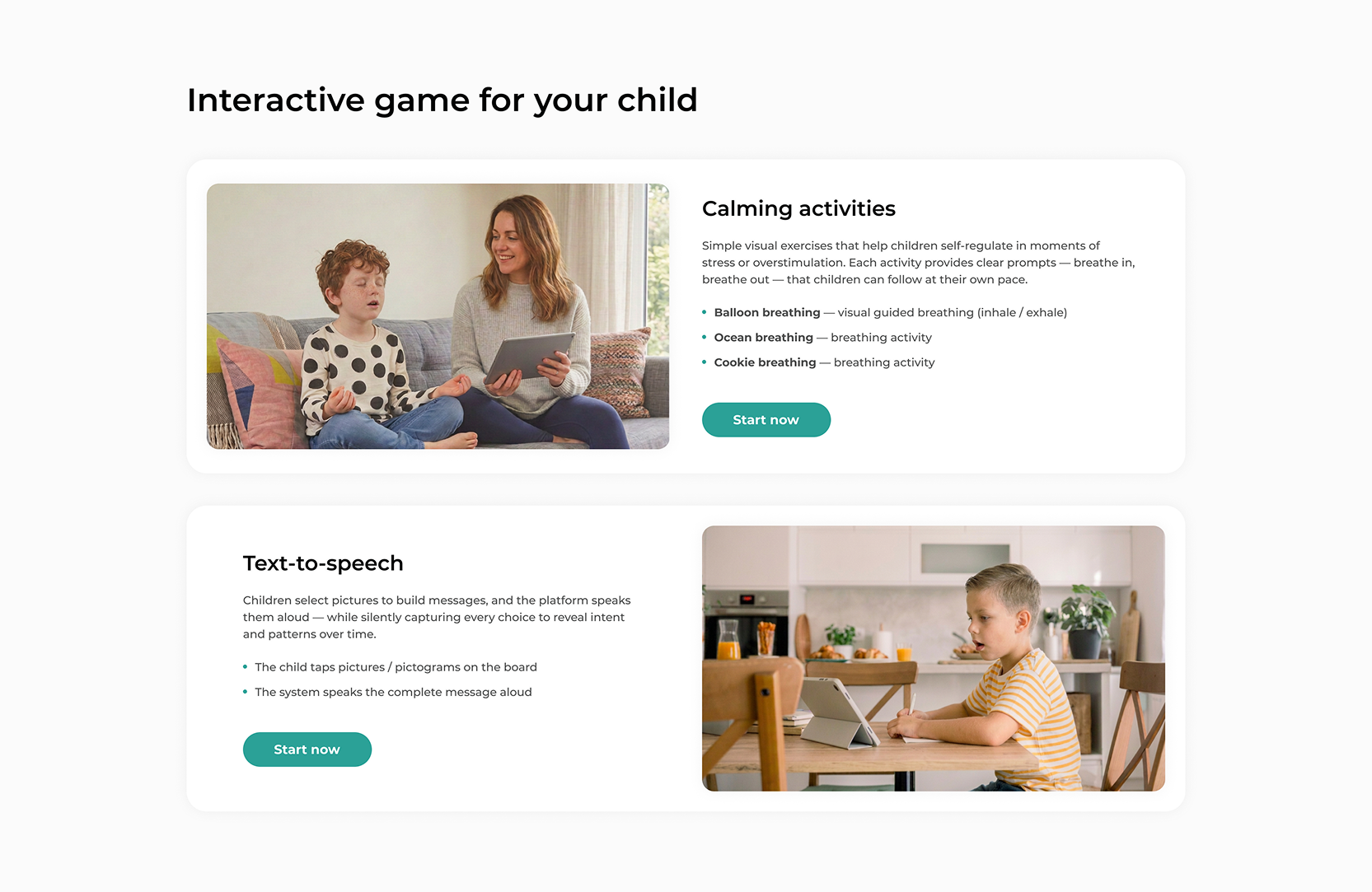
Our engagement began with a comprehensive evaluation of NeuroLog's digital ecosystem, including its public website, therapist portal, parent portal, and child-facing application.
Our work centered on helping NeuroLog:
- Improve the experience for different user groups;
- Support the platform's ability to meet the needs of more families and care providers.
Solution
Andersen Lab's assessment focused on identifying barriers that could affect adoption, engagement, and trust across the platform.
Based on the findings, our experts proposed actionable recommendations and a structured path for future product and UX improvements.
Our activities included:
- Conducting a full audit based on ADA and Section 508 requirements, Jakob Nielsen's usability heuristics, and cognitive accessibility principles;
- Identifying 20 improvement opportunities across navigation, workflows, content presentation, and child-facing interactions;
- Defining a follow-up UX discovery phase covering user research, stakeholder interviews, wireframing, and design validation.
Project results
Our experts provided practical guidance to help NeuroLog further mature and scale the platform. As a result, the nonprofit gained a stronger foundation for future product development, user experience improvements, and market positioning.
The team also gained access to expertise that might otherwise be difficult for an early-stage nonprofit to obtain.
Our collaboration enabled NeuroLog to:
- Prioritize usability and accessibility improvements in its solution;
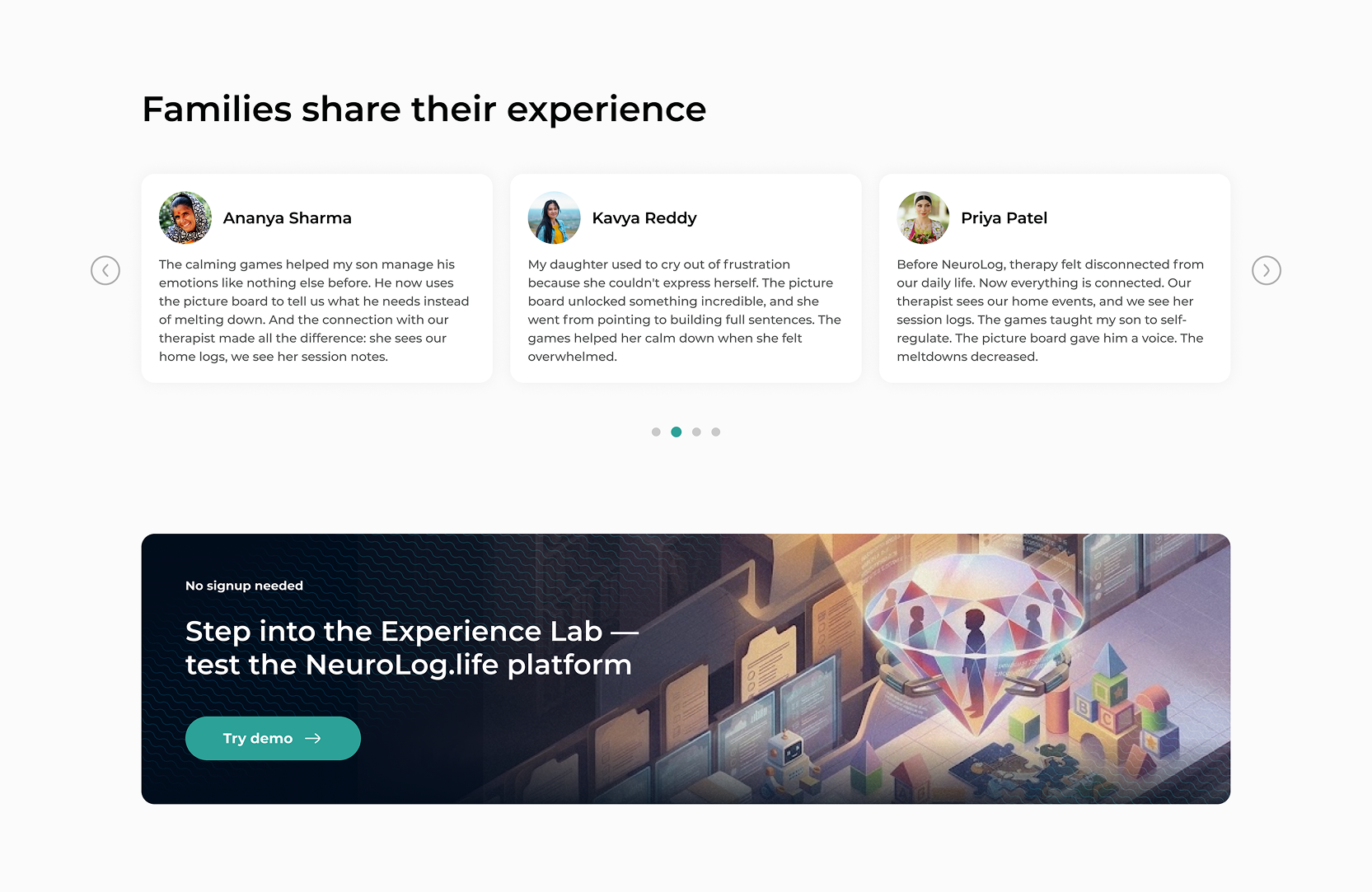
- Identify what was affecting engagement and confidence among key user groups;
- Build a structured plan for further UX research and design validation.


Let's talk about your IT needs
What happens next?
An expert contacts you after having analyzed your requirements;
If needed, we sign an NDA to ensure the highest privacy level;
We submit a comprehensive project proposal with estimates, timelines, CVs, etc.
Customers who trust us